


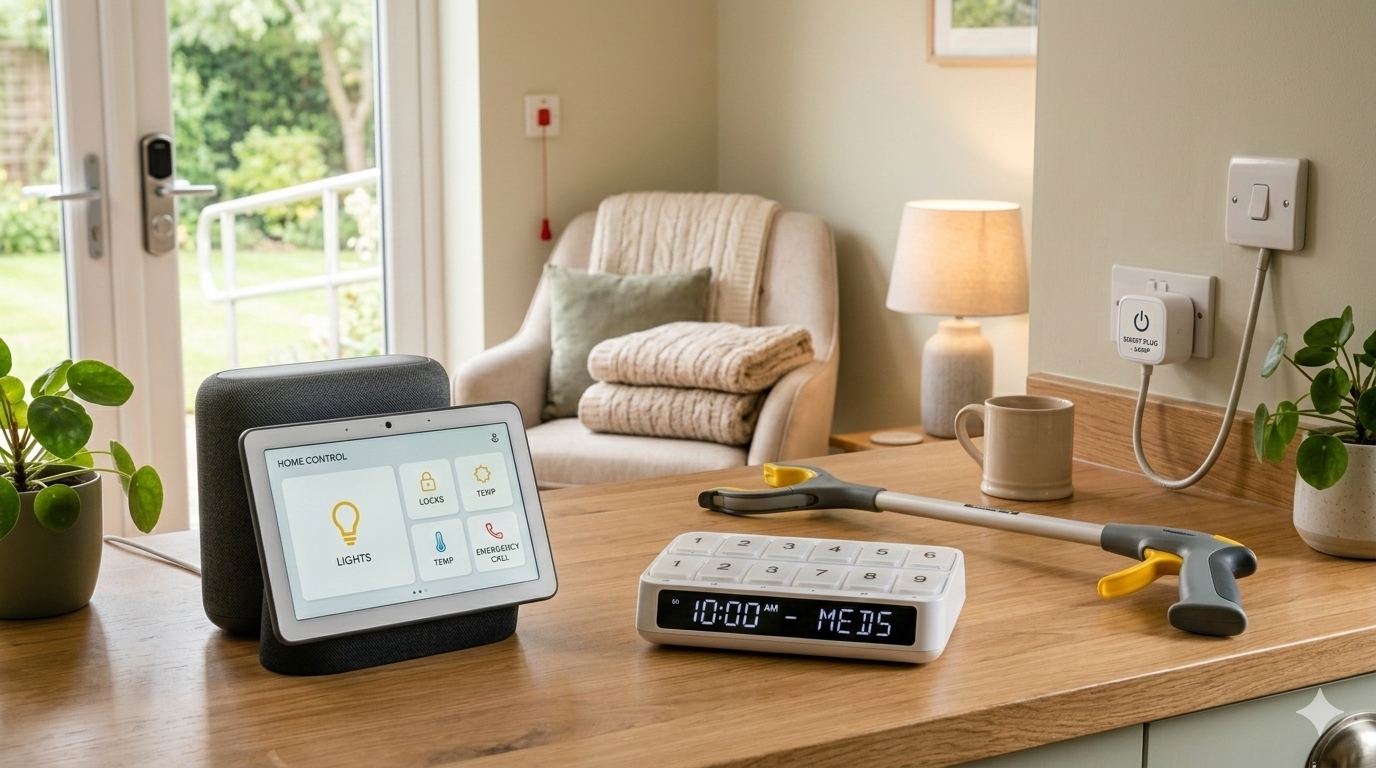
The right assistive tools for daily living can transform life at home for seniors and people with disabilities. Simple devices — from grab bars to adaptive kitchen tools — reduce dependence on others, prevent injuries, and restore confidence in everyday tasks. In this guide, we explore 7 of the best assistive tools for daily living in 2026 that make a real difference at home.
Table of Contents
1. Grab Bars — Essential Assistive Tools for Daily Living
Grab bars are among the most important assistive tools for daily living in any home. Installed in bathrooms, hallways, and staircases, they provide a secure handhold that prevents dangerous slips and falls. Modern grab bars come in stylish finishes that blend with any home décor — so they look great while keeping you safe. For seniors or anyone with balance issues, grab bars are the single most effective home safety upgrade you can make in 2026.
2. Reacher Grabber Tools for Independent Daily Living
A reacher grabber is one of the most practical assistive tools for daily living for people with limited mobility. These lightweight extendable tools allow you to pick up objects from the floor, reach high shelves, and grab items without bending or stretching. They are especially helpful for seniors recovering from hip or knee surgery, people with arthritis, and anyone who uses a wheelchair. A good reacher grabber is affordable, foldable, and instantly improves independence at home.
3. Adaptive Kitchen Tools for Easier Meal Preparation
Cooking and meal preparation should be enjoyable for everyone. Adaptive kitchen tools are vital assistive tools for daily living that help people with limited hand strength, arthritis, or coordination challenges prepare meals safely and independently. Easy-grip utensils, one-handed cutting boards, electric jar openers, and angled cutlery reduce strain on joints and make cooking accessible for all. These simple tools keep seniors and people with disabilities in control of their own nutrition and daily routine.
4. Dressing Aids for Comfortable and Independent Living
Getting dressed independently is important for dignity and confidence. Dressing aids are clever assistive tools for daily living that help people with limited mobility, arthritis, or balance issues put on clothes without assistance. Button hooks, zipper pulls, long-handled shoe horns, and sock aids all reduce the need to bend, stretch, or grip tightly. These small but powerful tools help seniors and people with disabilities start every day feeling capable and independent.
5. Shower Chairs and Bath Seats for Safe Bathing
Bathing safely is one of the biggest challenges for seniors and people with mobility issues. Shower chairs and bath seats are essential assistive tools for daily living that allow people to bathe comfortably without the risk of slipping or falling. Look for models with adjustable legs, non-slip rubber feet, and a built-in backrest for maximum support. A shower chair combined with a handheld showerhead gives complete control and makes bathing a safe, relaxing experience rather than a stressful one.
6. Voice Activated Devices for Hands Free Daily Living
Voice activated smart devices are becoming some of the most popular assistive tools for daily living in 2026. Smart speakers like Amazon Echo and Google Home allow seniors and people with disabilities to control lights, set medication reminders, make phone calls, and play music — all without touching a button. For people with limited hand mobility or vision impairments, voice control technology offers a level of independence that was unimaginable just a few years ago. A simple voice command can now replace dozens of daily physical actions.
7. Pill Organizers and Medicine Aids for Daily Safety
Managing medications correctly is one of the most critical assistive tools for daily living challenges for seniors. Weekly pill organizers, automatic pill dispensers, and medication reminder apps ensure the right dose is taken at the right time every day. Modern pill dispensers lock unused compartments to prevent accidental double dosing and send alerts to family members or caregivers if a dose is missed. For seniors managing multiple prescriptions, these simple tools can prevent serious health complications and hospital visits.
The right assistive tools for daily living make all the difference between struggling at home and thriving independently. Whether you are a senior, a caregiver, or someone managing a chronic condition, these 7 tools are practical, affordable, and genuinely life-changing. Start with the tool that addresses your biggest daily challenge — and build a safer, more comfortable home from there. Small investments in the right assistive tools today can lead to years of greater independence and quality of life.